
Finches are discerning eaters, and Nyjer seed is their favorite for a reason: it’s small, oil-rich, and easy for delicate beaks to handle. Those same qualities demand a purpose-built feeder that meters seed carefully, keeps moisture out, and stays easy to clean week after week. In this guide, you’ll learn the criteria that actually matter, see how the main feeder types compare, and get a practical workflow to pick the right model for your yard.
The goal is simple: buy once, waste less seed, and attract more goldfinches, siskins, and redpolls. To do that, we combine short, readable paragraphs with compact checklists so you can scan quickly and still understand the “why” behind each decision. You’ll also find five FAQs at the end and a final takeaway that wraps the tips to choose a refillable bird feeder for Nyjer seed into a clean decision path.
Understand Nyjer Seed and Finch Behavior First
Nyjer (often called thistle) is a tiny, lightweight seed that spoils faster than larger seeds if left in heat or humidity. That means your feeder must control seed flow precisely and guard against moisture. Finches also prefer short perches or clinging surfaces that suit their body size and feeding style, so hardware meant for big birds can backfire.
Key implications:
- Seed control matters because pin-sized seeds can pour out of oversized ports.
- Freshness wins since stale Nyjer is ignored; capacity must match your yard’s traffic.
- Perch ergonomics favor short, narrow perches or clinging mesh that suits finch feet.
- Weather defense and drainage keep the seed from clumping after summer storms.
The Main Feeder Types for Nyjer
1) Tube Feeders (Thistle Tubes)
Tube feeders use micro-slit or pin-sized ports and short perches. They excel at controlling seed release and keeping the feeding area tidy. Clear tubes let you track seed level at a glance, which helps avoid stale leftovers. For most users, this is the default starting point.
Consider:
- Strengths: Precise seed flow, predictable refills, easy to monitor, and low waste.
- Watch-outs: Cheap plastics may yellow or crack; ports must be truly small.
- Best fit: Most backyards where you want clean delivery and straightforward upkeep.
2) Stainless Mesh Feeders (Finch Mesh)
Mesh feeders let finches cling and extract seed through fine stainless mesh. Birds spread out across the surface, reducing crowding and boosting throughput in busy yards. Build quality tends to be high, and metal components handle sun and weather well.
Consider:
- Strengths: Durable hardware, many feeding spots, and natural clinging behavior.
- Watch-outs: Mesh must be fine; coarse mesh wastes seed and admits moisture.
- Best fit: High-traffic yards or users who value longevity and “all-metal” builds.
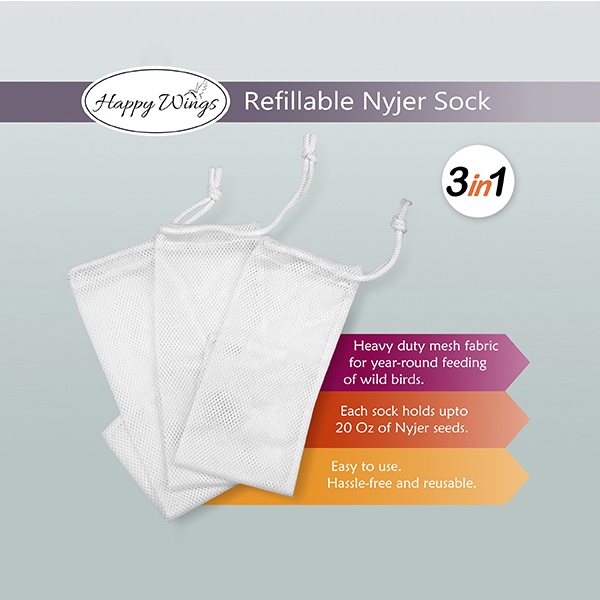
3) Refillable Sock Feeders
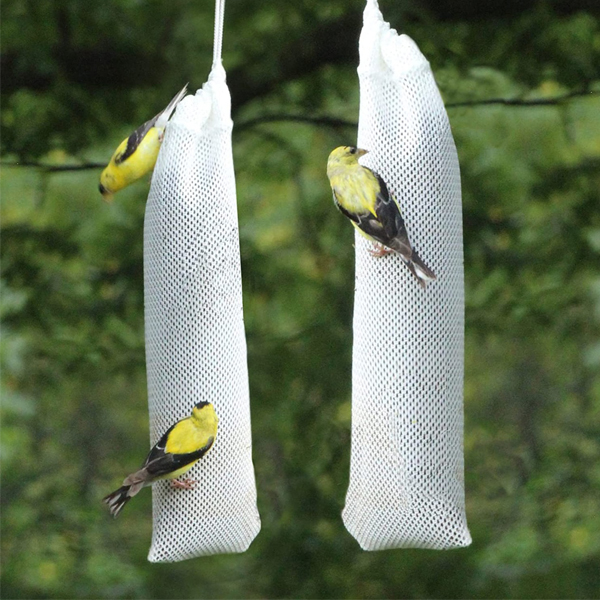
Sock feeders are fabric sleeves that dispense through the weave. They are inexpensive and effective for testing finch interest. However, socks stretch, clog, or fade, and they need more frequent replacement than tubes or mesh.
Consider:
- Strengths: Low cost, quick finch adoption, feather-light to hang anywhere.
- Watch-outs: Short lifespan, potential for waste if the weave loosens.
- Best fit: Seasonal use, budget trials, or as a supplemental feeder.
Bottom line: Start with a tube if you want maximum control and tidy feeding. Pick mesh if your yard gets heavy traffic all day and you want a long service life. Use socks as a trial or a low-cost second station.
The Features That Actually Matter
A long spec sheet is meaningless unless it maps to real outcomes: fresh seed, less waste, and easy maintenance. Use the criteria below to judge any feeder in minutes.
1) Seed Flow Control
Your first filter is how well the feeder meters tiny seeds.
- Micro-slit or pin-sized ports on tubes prevent the dumping of seeds.
- Fine stainless mesh should make it hard to pinch the seed out with two fingers.
- Adjustable flow is rare but helpful; if present, ensure adjustments hold their setting.
2) Capacity That Matches Your Birds
Nyjer goes stale quickly. Oversized reservoirs become money pits.
- Suitable for small to medium capacity (0.5–1.5 lb) and accommodates 1–6 finches visiting daily.
- Larger capacities work only if you have constant traffic to turn seed in 3–7 days.
- Rule of thumb: If the seed sits longer than a week, downsize the feeder.
3) Build Quality and Materials
Weather and UV are relentless; materials are your insurance policy.
- UV-stable polycarbonate or acrylic tubes resist yellowing and cracking.
- Powder-coated metal caps and bases outperform plain plastics over time.
- Stainless steel for hangers, mesh, and screws minimizes rust and failures.
4) Top-Fill Access and Secure Lids
Refilling should be clean and fast, and the lid must actually seal.
- Wide-mouth, locking top caps prevent spills and deter raccoons.
- Hinged lids are fine if the hinge is metal and the latch is positive.
- A gasket or tight fit limits rain ingress. Test the lid before buying if possible.
5) Weather Protection and Drainage
Moisture is the enemy of Nyjer.
- Rain domes or wide caps shed water and keep ports usable after storms.
- Drain holes in the base and vent slots up top reduce condensation.
- Tight seam tolerances keep wind-driven rain from seeping into the tube.
6) Disassembly and Cleaning
If you cannot open it easily, you won’t clean it often.
- Tool-free bases that twist or unscrew save time.
- Removable port plates or screens allow a thorough scrub.
- Smooth interior walls stop seeds from catching and molding.
7) Perch and Port Geometry
Make feeding comfortable for finches and less attractive for larger birds.
- Short, narrow perches favor goldfinches over house sparrows.
- Port spacing that prevents shoulder-bumping reduces aggression.
- No-perch clinging mesh is highly finch-friendly and discourages big birds.
8) Pest Resistance
Nyjer is not a squirrel magnet like sunflower, but don’t rely on that.
- Metal hanging hardware and locking lids stop easy break-ins.
- Weight-activated perches are rare on finch feeders but helpful near mixed-seed stations.
- Pole baffles keep climbers from reaching the feeder.
9) Mounting Flexibility and Safety
Location influences feeding success and bird safety.
- Hanging hooks are versatile; pole mounts add stability and baffle options.
- Window distance: Keep feeders <3 ft or >30 ft from glass to reduce strikes.
- Sight lines: Keep 6–10 ft from dense cover to thwart ambush predators.
10) Warranty and Parts
Long-term value beats short-term savings.
- Named warranties with clear terms show the brand stands behind the product.
- Replacement parts for ports, caps, and bases extend service life.
- Standard hardware sizes make DIY fixes easier.

A Simple, Repeatable Buying Framework
Use this five-minute workflow to turn browsing into a confident purchase.
- Gauge traffic.
Watch your yard for a few days. Modest visits? Choose a small tube or a compact mesh. Many finches at once? Favor a larger mesh or a robust tube with more ports. - Pick the seed delivery style.
- Prefer control and tidiness → Tube with micro-slit ports.
- Prefer high throughput and durability → Fine stainless mesh.
- On a budget or testing → Refillable sock.
- Prefer control and tidiness → Tube with micro-slit ports.
- Check freshness alignment.
Ensure your chosen capacity will be emptied in 3–7 days during your season. If not, go smaller. Freshness beats volume for finch attraction. - Audit the weather defenses.
Look for a locking cap, rain dome, or wide cap lip, drain holes, and top vents. These four features collectively prevent clumps and mold. - Test cleanability.
Can the base twist off? Do port plates remove? Are interior surfaces reachable with a bottle brush? If any answer is “no,” move on. - Confirm mounting and safety.
Decide on pole + baffle or hanging. Position with safe window distances and clear flight lines. Plan the actual spot before purchase. - Validate support.
Check whether the manufacturer offers spare parts and a clear warranty. This saves money long term.
Placement and Setup for Best Results
Where and how you hang the feeder affects whether finches treat your yard as a reliable stop. Aim for a spot with shelter from wind-driven rain but open enough for vigilance against predators. Keep routine access in mind so refilling and cleaning are easy for you.
Practical guidance:
- Height: Hang at 5–6 ft for visibility and serviceability.
- Cover: Place near shrubs or small trees for escape routes, but not right inside dense cover.
- Wind/rain: Use the leeward side of a structure or add a dome for stormy climates.
- Companion feeders: If you also run mixed-seed feeders, keep the Nyjer feeder a few meters away to reduce competition from larger birds.
Maintenance That Keeps Birds Coming Back
Nyjer is finicky about freshness. A clean feeder with a steady supply of fresh seed is the simplest way to stabilize finch traffic. Short, predictable upkeep beats irregular deep cleans.
Your maintenance rhythm:
- Refill cadence: Smaller, frequent top-ups prevent stale pockets.
- Routine cleaning: Every 2–4 weeks in mild weather; weekly in heat or humidity.
- Process: Disassemble → warm soapy soak → thorough rinse → full dry before refilling.
- Disinfection option: Use a mild bleach solution when needed, then rinse and dry completely.
- Ground hygiene: Rake or sweep under the station to deter pests and mold.
Troubleshooting: Quick Fixes to Common Issues
Even good setups need occasional tuning. Use these targeted fixes before replacing hardware.
- Seed vanishes too fast: Ports are too large or the mesh is too coarse. Switch to micro-slits or finer mesh.
- Clumps after storms: Add a dome, verify lid lock, and confirm base drainage. Reduce capacity during very humid weeks.
- Finches ignore the feeder: Refresh the seed, move closer to cover, or try a mesh model that supports clinging.
- House sparrows dominate: Shorten perches, reduce perch count, or use mesh without long rails.
- Squirrel interest spikes: Install a pole baffle, increase hanging distance from jump points, and ensure the lid locks tightly.
Seasonal Strategy and Seed Management
Bird activity and weather shift through the year. Your feeder strategy should shift with them.
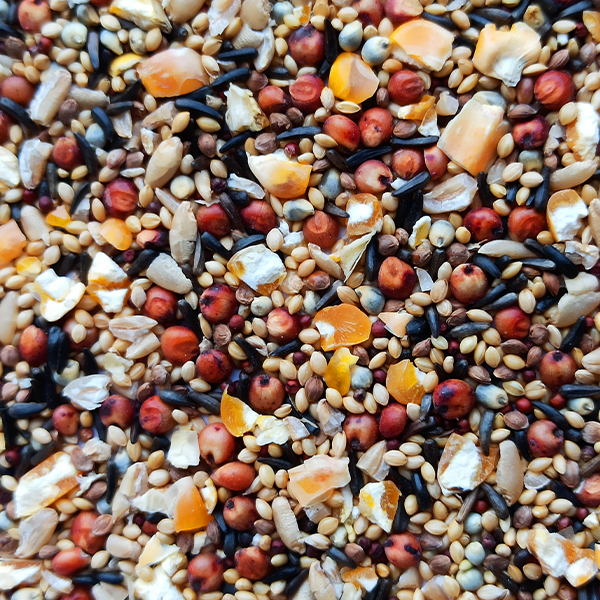
- Hot summers: Downsize capacity so the seed turns over quickly. Store Nyjer in airtight containers in a cool, dry place.
- Wet seasons: Prioritize domes and drainage checks. Clean more frequently.
- Peak finch periods: Consider two small stations rather than one large one to reduce crowding and maintain freshness.
- Low-traffic months: Keep one small feeder active so the site remains known, but avoid oversupplying.
Three Quick Scenarios to Model Your Choice
Scenario A: New to finches, light traffic
Start with a small tube feeder with micro-slit ports and a locking top. Place it near a light cover, use a compact rain dome, and refill every few days so the seed never sits.
Scenario B: Busy yard, many finches
Pick a fine-mesh stainless feeder with a generous surface area and solid drainage. Mount on a pole with a baffle. Expect to refill often during peaks and clean weekly in humid weather.
Scenario C: Budget-conscious or seasonal user
Use a refillable sock as a low-cost test. If birds flock to it, upgrade to a tube or mesh for durability and better moisture control while keeping the sock as a second station.
Final Takeaway
A great Nyjer setup comes from aligning seed physics with bird behavior. Control flow with micro-slits or fine mesh, size capacity to what your birds eat in a week, defend against moisture with domes and drainage, and make cleaning effortless with tool-free parts. Follow these tips to choose a refillable bird feeder for Nyjer seed, and you’ll build a low-waste, high-traffic station that keeps finches returning all season.
FAQs
Seed control. Choose micro-slit ports on tubes or fine stainless mesh on clinging feeders so Nyjer doesn’t pour out or clog. Everything else supports that goal.
Pick a capacity your birds can empty in 3–7 days. If the seed lingers longer, it goes stale, and birds lose interest. In most yards, small to medium works best.
In climates with regular rain or wind, yes. A dome prevents clumps, keeps ports open, and reduces waste. It pays for itself quickly in saved seed.
Every 2–4 weeks in mild weather and weekly during heat or humidity. Disassemble fully, wash with warm soapy water, rinse well, and dry completely before refilling.
Not bad, just higher maintenance. Socks are great for trials or as a second station, but tubes or stainless mesh feeders are better for durability, weather defense, and consistent seed flow.

